
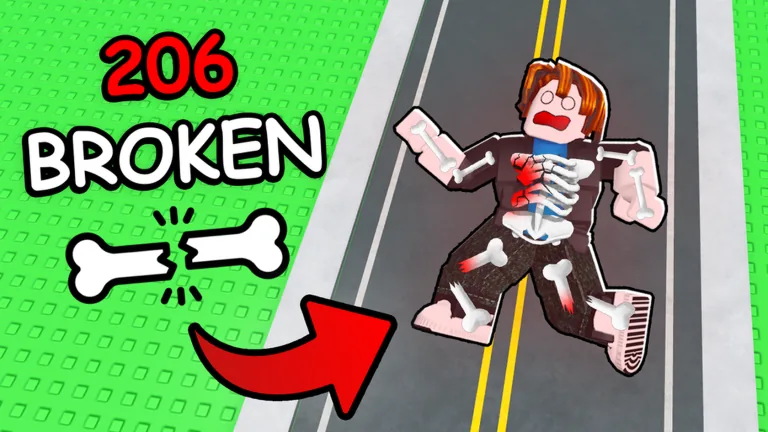
Plan where the move ends
A dodge is incomplete until you know the landing. Clearing a wall can still create a damaging road impact or leave no space for the next correction. Before moving, identify a target area that is wide enough to recover.
Judge a landing by what follows
Use three checks:
- Impact: did visible bone damage increase sharply?
- Control: could you make the next decision, or were you only tumbling?
- Position: did the landing open or close the next route?
A visually dramatic landing can still be useful if it preserves control and distance. A quiet-looking landing can be poor if it sends the avatar directly toward the next wall.
Test the approach
When one landing repeatedly fails, do not focus only on the final moment. Change the approach:
- Enter from a wider angle.
- Begin the correction earlier.
- Reduce the amount of movement.
- Aim for more recovery space.
- Compare damage and distance.
Keep upgrade state fixed during a landing test. Otherwise, you cannot separate the purchase from the technique.
Avoid invented controls
Desktop, Mobile, and Tablet are supported, but exact inputs must be confirmed in the live client. Apply the same planning method regardless of platform: look ahead, choose a landing zone, make one controlled adjustment, and let the result settle.
Build a repeatable landing drill
Choose one troublesome approach and spend several attempts observing it rather than chasing a record. On the first run, note where the avatar leaves stable ground. On the second, begin the correction earlier. On the third, use a smaller correction and compare the result. Keep the route and upgrade state as consistent as possible.
Record whether each version reduced visible damage, preserved control, and left a clearer next route. A useful landing does not need to look perfect. It needs to keep the run alive and make the following decision possible. When two approaches produce similar damage, prefer the one that gives you more open space afterward.
Stop the drill if the live route changes enough that the attempts are no longer comparable. The purpose is to learn a decision pattern, not to force identical results from conditions that differ.
FAQ
What makes a good landing?
It limits damage, preserves control, and leaves useful space for the next obstacle.
Should I aim for a specific body part?
No reliable public rule confirms body-part landing effects. Use the live feedback instead of guessing.
Why do I crash after avoiding an obstacle?
The avoidance move probably did not include a safe landing and exit plan.
Can upgrades improve landings?
Check the current upgrade menu for any relevant effect. Do not assume a specific stat exists.
How should I compare two approaches?
Repeat each several times and compare damage feedback, recovery control, and final distance.