
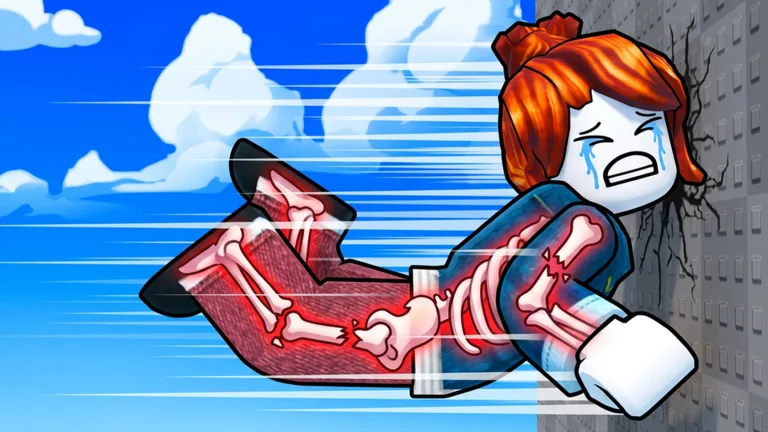
Build consistency before chasing records
Your first objective is not maximum speed. It is learning how the avatar moves, how early you need to react, and which impacts end otherwise promising runs. Survive The Slope rewards greater distance with greater earnings, so a repeatable safe run is more useful than one wild attempt followed by several early failures.
Run the same learning cycle until you can explain why each attempt ended.
First run: observe
Use the opening attempt to answer three questions:
- How much control do you have while sliding or tumbling?
- How does the camera affect your view of the next obstacle?
- Which visual feedback shows that bone damage is getting worse?
Confirm the current inputs from the live Roblox interface. Avoid copying keybinds or touch gestures from an unrelated Slope game. The verified target is Roblox place 91575878912978, developed under StarBite Bones.
Second run: look farther ahead
Shift your focus from the avatar to the path beyond it. The immediate animation can distract you from the wall or edge that matters next. Pick a point farther down the slope, scan for the widest safe route, and make adjustments before the obstacle fills the screen.
Early movement gives you time to recover. Late movement often replaces one collision with a worse landing.
Third run: choose a repeatable line
When you find a section that offers two routes, use the easier line until you can reproduce the result. A good beginner route has:
- room to correct;
- visible obstacles;
- fewer abrupt direction changes;
- a landing you can recognize before committing;
- a clear next decision after impact.
Do not assume the fastest-looking path produces the best distance. A slower controlled line can keep a run alive long enough to earn more.
Review before spending
At the end of every run, write down or remember one failure cause. Keep it specific: “I reacted after the wall covered the screen” is useful; “I was unlucky” is not.
| Failure pattern | Next-run adjustment |
|---|---|
| Obstacle noticed too late | Look farther down the slope |
| Over-correction | Use a smaller earlier input |
| Bad landing after a dodge | Plan the landing before moving |
| Repeated damage at one section | Change route or timing |
| Upgrade did not help | Retest without changing other habits |
Buy upgrades as experiments
Upgrades are confirmed to help players push their distance records, but current names, prices, and exact effects must be read in the live menu. Treat each purchase as a test. Choose the upgrade whose displayed effect addresses the last repeated failure, then make several comparable runs.
If distance improves once and collapses twice, keep practicing before declaring the purchase essential. If it improves consistently, you have a useful progression path.
Separate earning runs from record runs
An earning run should favor predictable choices. A record run can accept more risk once you know the route and have enough practice. Mixing both goals creates poor decisions: you take dangerous lines while trying to farm, then blame upgrades when the real problem is risk.
Use this rhythm:
- three controlled runs for earnings and route learning;
- one deliberate record attempt;
- one review before spending again.
FAQ
What should a beginner do first?
Confirm the current controls, complete an observation run, and learn to look ahead before trying to set a distance record.
How do I earn more?
The official description connects greater distance with greater earnings. Build a consistent route that keeps the run alive longer.
Are exact upgrade stats available here?
Use the live upgrade menu for current names, prices, and effects. This guide avoids publishing unverified values.
Why do my runs feel random?
Review the first major mistake rather than the final crash. Early positioning often determines the later impact.
Can I use the same approach on mobile?
Yes. The observation and review method works on Desktop, Mobile, and Tablet, though the live controls differ by platform.