
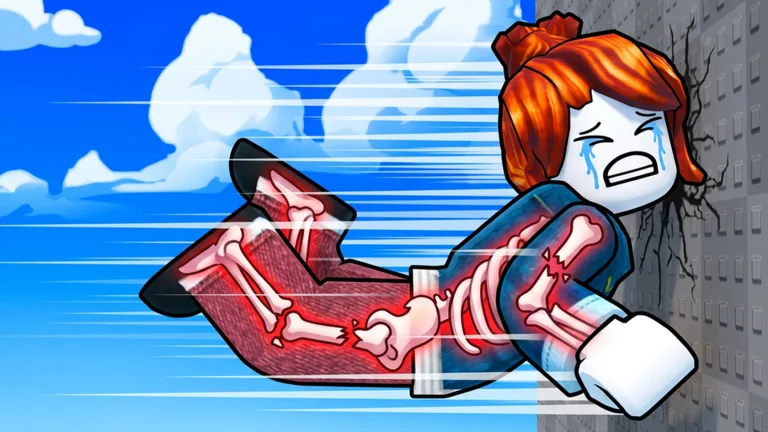
Start with consistency
Look ahead, react early, avoid unnecessary impacts, and learn from the first mistake that changes a run. Farther travel earns more, and the run ends when all bones are broken. A controlled descent pays off more often than one spectacular tumble.
Ten tips you can use immediately
- Look beyond your avatar. The character is visually distracting during a tumble. Keep your attention on the next obstacle and available space.
- Correct early. A small decision made with room available is safer than a desperate move at the obstacle.
- Prefer recoverable lines. Leave space for the avatar to settle after a collision or landing.
- Treat bone damage as feedback. Repeated damage at the same point indicates a route or timing problem.
- Change one thing per run. You cannot learn which adjustment worked if you change route, timing, and upgrade strategy together.
- Separate earning runs from record attempts. Stable runs support progression; record attempts can accept more risk.
- Review the first decisive error. The final crash may be a consequence of an earlier bad position.
- Test upgrades in groups of runs. Compare typical results before and after a purchase.
- Use live prompts for controls. Desktop, Mobile, and Tablet are supported. Read the current input layout in your Roblox client.
- Stop when concentration drops. Several careless runs teach less than one deliberate test.
Use a three-run practice block
Give each block one objective. For example, spend three runs looking farther ahead, three runs choosing wider lines, and three runs analyzing landings. Record the typical distance and the first major error in each block.
If wider routes reduce early damage across several runs, keep the habit. If a tactic helps once and fails twice, test it again before making it part of your normal play.
Protect the middle of the run
Beginners often focus only on the start and the eventual crash. The middle section is where consistent players preserve a good attempt. Avoid turning a stable run into a gamble merely because the current distance looks promising.
Ask three quick questions while descending:
- What obstacle is next?
- Where is the largest safe space?
- If this move goes badly, is there room to recover?
The third question is especially important. A fast line with no recovery area can erase the value of every earlier decision.
Know when to take risk
Risk is useful when it has a purpose. During an earning run, choose repeatable lines and protect progress. During a personal-best attempt, accept a harder line only when its potential distance gain justifies the higher chance of ending the run.
Do not switch goals halfway through without noticing. A safe run becomes inconsistent when you suddenly chase a narrow shortcut. Decide the purpose before starting and evaluate the run against that purpose afterward.
FAQ
What is the fastest way to improve?
Review one repeated failure, make one earlier correction, and compare several runs. Focused practice is easier to measure than changing everything at once.
Should I always avoid collisions?
Avoid unnecessary collisions. Some contact may be unavoidable, but a route that repeatedly causes severe damage deserves a different approach.
Why do good starts still end early?
An earlier landing or correction may leave the avatar badly positioned for the next obstacle. Review the first decision that reduced your options, not only the final crash.
Do I need a specific control setup?
No specific setup was verified as best. Use the live prompts and a comfortable device, then practice with consistent settings.
How should I measure progress?
Track typical distance, frequency of early crashes, and the cause of the first major error. A new record is useful, but consistency shows whether you truly improved.